



Over 31 million Americans have sinusitis, according to the U.S. Department of Health and Human Services. This accounts for hundreds of thousands of days lost from school and work, plus significant expenditure for diagnostic and therapeutic purposes.
Sinusitis can be an important trigger of asthma in both children and adults, and its presence should be considered in any case of difficult-to-control asthma. Effective treatment of the underlying sinusitis frequently results in significant improvement in asthma symptoms.
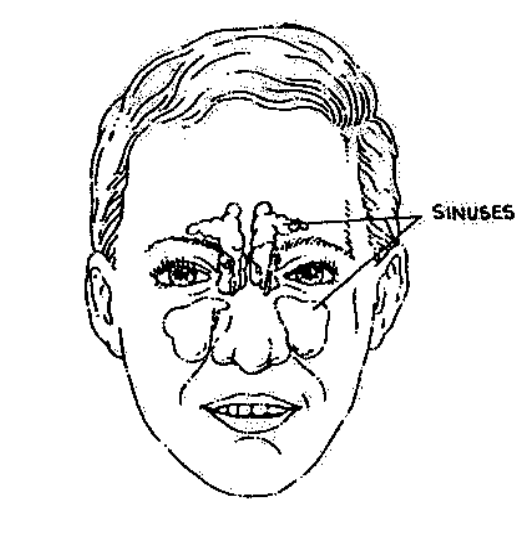
The maxillary and ethmoid sinuses — located in the cheek area and on either side of the bridge of the nose near the inner eyes, respectively — begin developing before birth and can easily serve as a focus for infection. Although sinusitis has generally been under-diagnosed in the past, there has been a recent increase in interest in this disease and its link with bronchial asthma.
Sinuses: Description and Function
The sinuses surround the nasal cavity. Each sinus has an opening called an osteum, which serves as a drainage site in the sides of the nose. In addition to the maxillary and ethmoid sinuses, there are the frontal sinuses above the eyebrows and the sphenoid sinuses deep within the head.
The precise functions of the sinuses are not fully understood, but they include roles in voice timbre, smelling, production of protective mucus, dampening sudden pressure changes in the nose during breathing, and lightening the weight of the skull.
Causes and Symptoms of Infection
Sinusitis most commonly follows a viral upper respiratory infection. The inflammation caused by the virus results in swelling of the nasal membranes, which obstructs the sinus osteum and decreases ciliary action. The subsequent accumulation of mucus in the sinuses sets the stage for secondary bacterial infection. Allergic rhinitis (hayfever) is also a common predisposing factor.
Other predisposing factors include deviated septum, bone spurs, nasal polyps, non-allergic rhinitis, gastroesophageal reflux disease, swimming and diving, and cigarette smoking. Systemic conditions associated with a high incidence of sinusitis include immune deficiency and cystic fibrosis.
The sinuses protect themselves against infection through an effective self-cleansing mechanism. A mucus "blanket" is carried out of the sinus cavity through the osteum and into the nose by microscopic hair-like structures called cilia. This mechanism depends on a well-functioning osteum, mucus of proper thickness, and actively beating cilia. When this mechanism becomes impaired, oxygen contact in the sinuses decreases, mucus accumulates and stagnates, and becomes infected by normally harmless bacteria or viruses found in the nose.
Detecting Sinusitis
- Suspect the presence of sinusitis in difficult-to-control asthma
- Illness frequently follows a common cold
- Allergic rhinitis is often a predisposing factor, though sinusitis may also be related to a deviated septum, bone spurs, nasal polyps, swimming and diving, or cigarette smoke
- Subtle symptoms may include nasal stuffiness, yellow or green postnasal discharge, loss of sense of smell, cough, sore throat, and recurring ear infections in children
When a patient with sinusitis is first seen by a physician, symptoms tend to be very subtle — typically nasal stuffiness, yellow or green postnasal discharge, and loss of smell. Day and night cough, sore throat, and foul breath are also common. The most important diagnostic clue to acute sinusitis is the failure of symptoms to disappear after a typical cold: the clear nasal discharge becomes yellow or green and persists. Children with recurrent ear infections should be suspected of having sinusitis.
Diagnosis and Treatment
The diagnosis of sinusitis is made by careful history and physical examination. X-rays of the sinuses are also helpful, but in many cases a standard sinus radiograph may be negative and a CAT scan may be required, particularly when there is no ethmoid sinus involvement.
Once the diagnosis is made, appropriate therapy is promptly initiated. This includes topical or systemic nasal decongestants to shrink the swollen membranes and promote drainage. With badly swollen nasal membranes, topical cortisone nasal sprays may be helpful. It is also important to thin the secretions in the sinuses to facilitate drainage — this can be achieved by drinking increased amounts of fluid and by the use of medications.
Antibiotics should be used to control infection. The drug of choice for acute or chronic sinusitis is Ampicillin or Amoxicillin. If a penicillin allergy is present, Sulfa can be used. If no significant improvement is seen after an appropriate course of medical therapy — or if the sinusitis clears up only to return shortly after — surgery may be needed. This is especially true if there are anatomical abnormalities such as a deviated nasal septum, bone spurs, nasal polyps, or a congenitally small sinus osteum.
If you have any questions, contact our office: Omaha: 402-391-1800 Lincoln: 402-464-5969
Call to Schedule an Appointment!
Lincoln: 402.464.5969 Omaha: 402.391.1800